Learning Centre

[wpdreams_ajaxsearchlite]

contact us handyman VIP

Here’s a good question: How to choose a handyman for your carpentry requirements (flooring, doors, cabinets, wardrobes)?

Are you looking for a handyman near you for your carpentry requirements? Whenever anyone asks “how can I find a handyman near me?” I generally point them in the direction of “How do I choose the right handyman?” which runs through six steps to finding a good handyman in your local area. A good handyman should be able to deal with any type of carpentry project including fitting and fixing wood flooring, as well as fitting and adjusting wooden doors, and fitting, installing and repairing cabinets and wardrobes, and so on. You may need to hire a handyman to put together new flat pack furniture that you’ve bought. A good handyman should be able to carry out all of these types of tasks. Maybe you need some decking boards repairing or installing, or maybe a kitchen installation or wooden windows repair or replacement. A good handyman should be able to do this too.

So you’ve read our article about how to find a handyman near you, now let’s look at what you’ll be looking for in terms of specific carpentry experience. So carpentry and joinery are different disciplines even though they’re often referred to as if they’re the same trade. They aren’t but there is a bit of overlap in both. Think of a joiner as the fabricator who creates wooden window frames, doors, and other wooden structures offsite whilst a carpenter then goes and fits them in the home, and repairs and maintains them. Of course a handyman can have both skills and essentially be both a carpenter and a joiner. Does your handyman have both sets of skills? More importantly do they need to have. If you’ve purchased some flat pack furniture or an off the shelf ready-made door you’ll unlikely need joinery skills, maybe a cabinet maker.

So the handyman certainly needs to be able to carry out the work that they’ve promised to do, within budget and to the agreed timescale.  I would recommend asking for evidence of similar carpentry jobs that they have completed. Ask for happy customer testimonials, again check online reviews. Do you have any family, friends, colleagues or associates who needed a staircase fitting for instance. Did a joiner custom make this for them? Another thing is cost of materials and this is really important as you’re not only paying for the handyman’s time but also the wood and other materials to do the project. You might like solid oak but check the cost and possibly opt for something cheaper if it doesn’t fall within your budget. Also, can the handyman provide you with professional advice on how wood expands under which conditions under which this occurs, for instance how much room to leave when fitting wooden flooring. Another top tip may seem obvious but since there are different types of wood, ensure that availability of materials ties in with your home’s overall décor including the type of wood used in your home’s other furniture.

Property maintenance falls into many categories and you’re usually better off taking a monthly contract which you’d expect would be more cost effective than adhoc maintenance jobs. Scan through the headings below which should give you an idea of the types of jobs that might be involved typical property maintenance. You notice the regular maintenance section is the longest as we believe that regular maintenance will decrease the likelihood of needing emergency or property damage maintenance.

Regular Maintenance

Under regular or routine maintenance you’d generally find any work that you can predict will need carrying out including guttering cleaning and repairs, drainage issues, painting and decorating. Good landlords generally want their properties to have excellent curb appeal to maintain their landlord reputation, so regular upkeep in key. Since it’s usually quite easy to predict when these types of jobs will need doing, a fixed-monthly fees is reasonable for this. If you’re don’t agree a regular monthly contract which allows a handyman or property maintenance company to plan this time in, then expect to pay more if you suddenly decide you need this work doing at the last minute. It’s always better to be proactive and keep on top of property maintenance rather than reactive and wait for complaints to start rolling in before action is taken. Good, regular maintenance should also decrease the risk of instances of emergency maintenance becoming necessary. Landscaping and gardening may fall under the responsibility of the maintenance company, landlord or tenant. If it’s the maintenance company then this is usually a regular maintenance task which is pretty easy to predict how long it will take and how much it will cost. Regular inspections also need to be carried out for example a yearly boiler check by a Gas Safe registered engineer. Certain maintenance will generally be carried out between old tenants leaving a property and new tenants arriving, including painting and decorating, changing or repairing flooring and carpets. Although it depends on the quality of the landlord as to the condition in which they will rent out a property.

Emergency Maintenance

As mentioned in the emergency maintenance section above, the better you are at upkeep of a property, the less likelihood there will be of as many emergencies. But emergencies do tend to still happen occasionally. Fixing that old pipe before it bursts is usually case of prevention is better than the cure. Generally expect to pay a premium for emergency maintenance, again this will be more cost effective if you have a regular maintenance plan with a trusted handyman or property maintenance company.

Property Damage

These are the unknowns that may happen because of a flood, strong winds, a storm, and so on. They could also come under emergency maintenance depending on the severity of the damage and its impact on the tenants. A new roof will cost a few thousand pounds depending on the size and style of roof. If a roof is leaking following heavy rain fall it’s always advisable to check if a roof needs maintenance work to fix tiles etc or if it’s time to replace the whole roof as it’s become unrepairable. Again though if you keep up with the regular maintenance then the effects of property damage should be minimal. For example, heavy rain will generally be the catalyst that highlights the weakness in a poorly constructed or maintained roof. Storm damage, on the other hand, is a different, story and can cause real damage that didn’t exactly before this particularly extreme form of bad weather.

Gas Safety Certificates and Safety Checks

UK landlords are legally required to arrange regular safety checks, including:

  • An annual gas safety inspection carried out by a Gas Safe registered engineer
  • Energy Performance Certificate (EPC)
  • PAT testing and electrical safety checks
  • Ensure the property has smoke detectors which are tested and working
  • Contact your local handyman to discuss a property maintenance plan.

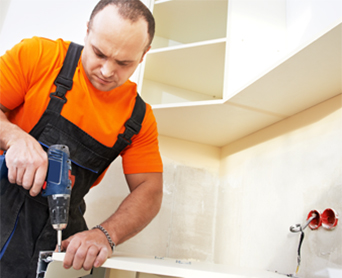
Handyman working on a sink

When choosing the right handyman for your job or project, it’s important you know what to look for. The key attributes you should look for in a good handyman are as follows:

  • Delivers high-quality work to a professional standard
  • Is punctual – arrives on time and delivers work to an agreed schedule, keeping you informed about any delays
  • No hidden costs – upfront about how much money the job or project will be including materials and labour
  • Will charge a reasonable going rate that is acceptable and inline with market rates
  • Is respectful or you and your home, and your neighbours. For example, without use of foul language on the job, working at reasonable times, cleaning and tidying up each day and afte the job or project is complete

Next, here’s six steps to finding a good handyman in your local area:

  1. Ask your family, friends, colleagues and/or associates for referrals. This is the best route to finding a trusted handman. Asking those around you will help you to learn how key facts such as if they arrived on time, completed the job on time and to a high standard.
  2. Check feedback. There are many online sources to check testimonials and feedback. Check performance on recent jobs particularly by filtering based on most recent completed jobs. This will be useful in uncovering handymen who did a good job previously but now might have started to underperform. Look for any complaints and negative comments, and see if the handyman has explains the situation by replying to the feedback with a resolution. It often how well a complaint or issue is resolved, that shows how good a tradesperson really is. You can also check local online forums for good tradespeople in your local area or networking groups.
  3. Get a few quotes. They say get three quotes, especially if you’re really not sure what the going rate for a job is. A good handyman will be completely transparent about their work and encourage you to seek out other quotes so you can be armed with all the knowledge you need to choose the right handyman for your job or project.
  4. Get it in writing. Check the project management skills of your chosen or proposed tradesperson. They should be proactive in offering this as part of their service anyway, especially for larger scale projects. It can be a red flag if the handyman skirts around the subject to agreeing a deal in writing. Working in this way can reduce the risks on not being on the same page and work towards ensuring everything stays on track.
  5. Ask for a little job to be done before the bigger job. There’s nothing wrong with dipping your toe into the water before diving in head first. If you’ve done your research and you’re still not sure then why not set your chosen handyman on with a smaller job to start with and see how they perform on that. Before “promoting” them to the main event.
  6. Use that handyman again and recommend them. Customer loyalty is great to use your handyman again and again once you’ve found him. Also recommend them and write a honest review to help others with their decisions.

It’s also worth asking for details of insurance, professional associations, memberships and qualifications.