We service all areas throughout Surrey. We work anywhere within the Cranleigh, Guildford and Horsham areas
[wpdreams_ajaxsearchlite]
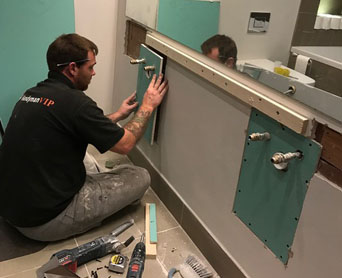
At Guy Building Services Ltd, you will be able to benefit from a dedicated one stop solution to all of your building, renovation and maintenance projects. We operate under two trading names to reflect the type of work we can do, renov8experts and HandymanVIP. As these identities show, we can do everything from very small jobs to large renovation projects. Overall, the list of services we cover is vast. We really are your one stop shop for handyman and renovation work.
So, if you are looking for a serious, professional and competent company to deliver your projects, then renov8experts will be able to deliver all your renovation, refurbishment and home improvement projects such as:
Extensions and side returns of all types, to include extra floors
Loft conversions and roofing works
Basement conversions and tanking works
Internal renovations with re-configuration of your home layout
Fitting all types of kitchens and bathrooms
Dilapidation work and preparing rental properties for new tenants
Project management to include architectural drawings
On the other hand, if you require help with the smaller jobs, with the help of HandymanVIP, you can also use our services for all of those little jobs in and around your home to include:
General repairs around your property and home, leaking taps, silicon replacement, adjusting doors, etc…
Laying and repairing of wooded and laminate floor
Carpentry/joinery services for any work around your home
Repairing damaged tile-works in around showers and bathtubs
Hanging of blinds, pictures, mirrors, etc…
Building shelves, cupboards and other furniture around your property
Interior and Exterior decorating services with repairs to water damaged walls and ceilings
Green solution – loft insulation, draft proofing, etc…
With over 20 years of experience, we offer a very high level of service focusing on delivering high quality finishes within an agreed budget and time frame. We are reliable, punctual and courteous and will ensure that you are satisfied with the work!
Contact us now for a no obligation quote visit

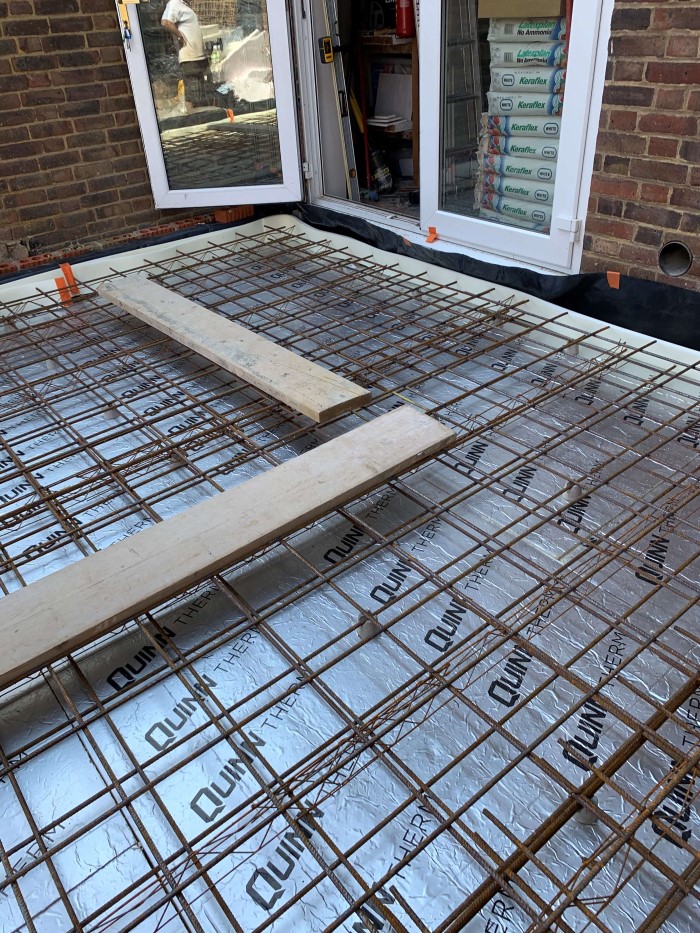
A concrete slab is ideal to lay on top of the foundation, providing a solid floor – known as a ground-bearing slab. Concrete pouring should ideally be done by a concrete pouring specialist but if you thinking of doing this as a DIY home improvement project, here’s the very brief main steps:
If in any doubt at all about this process, then contact concrete pouring specialists.


Firstly, let’s differentiate between a handyman who is a qualified electrician and a handyman who isn’t a qualified electrician. There’s an obvious difference to the type of electrical work each one will be able to carry out. At the end of the day, electricity is dangerous, and tradespeople should never put themselves or others at risk, either at the time the work is carried out or afterwards.
DIYers should only carry out minor electrical fixes as should handymen or handywomen who aren’t qualified to conduct work that only a registered electrician can. When new electrical work is being conducted, here in England Part P of the Building Regulation, which covers electrical safety in dwelling, must be complied with.
Carrying Out Notifiable (To A Building Control Body) Electricity Work
If a non-qualified handyman needs to carry out notifiable electricity work then the work will need to be inspected for safety following a Building Regulations application. You‘re better off getting an electrician for notifiable (certificated) electricity work since they can self-certify the work with no need for a Building Regulations application and subsequent inspection. Example of this kind of work include replacement of a consumer unit (fusebox).
What Are DIYers And Non-qualified Handymen Permitted To Carry Out?
Anything that includes replacement, minor repairs and like for like changes such as adding extra (or moving) switches, lights and plug sockets. Changing old or damaged electrical wires. Any places that are subject to water such as outside areas, bathroom and kitchen will need to be worked on by a qualified electrician.
Any kind of work that is carried out will still need to meet regulated standards so any handyman or DIYer who is thinking of carrying out this type of work will need to understand the dangers and work to regulated standards. They’ll essentially really need to know what they’re doing.
Can A Handyman Replace Or Add Addition Switches, Lights and Plugs Sockets?
As mentioned above, anyone who is competent to carry out this work can replace outlets or plug sockets, since you don’t have to be a qualified electrician to do this type of electrical work. But make sure you aren’t tired before starting this work and always work to regulated standards as these standards will need to be met for work of this type. To reiterate anyone who is competent to carry out this work to regulated standards, is ok to carry out this work. If you’re a DIYer considering carrying out this work and you’re at all unsure about what you are doing, then don’t even attempt it and hire a professional to do this work for you. Remember handymen who aren’t qualified electricians can do basic electrical work but can’t do work that requires certification. It’s highly recommended that if you require certificated work to be carried out that you hire a qualified electrician or a handyman who is also a qualified electrician.
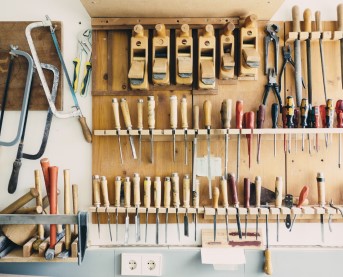
Here’s a few of the tools that every handyman needs. The tools required by a particular handyman will all depend on the types of tasks, jobs and projects that they do.
Of course, the last five are fool’s errands, just thrown in for a laugh but the rest might be absolute essentials for any self-respecting handyman or handywoman, depending on the types of tasks, jobs and projects they carry out.
Ok so that’s a long, long list of tools so if I was to narrow this down to just ten, yes ten, tools that are essential for a handyman to possess, here’s what I’d probably go for. If I could only carry around ten tools, here’s what I’d opt for:
This is just a fun post because, we in the UK and the rest of the world, have had enough doom and gloom in 2020 due to Covid-19 and the Coronavirus. Also, it’s coming up to Christmas and you may be looking for gifts for the handyman who has everything! Whether he’s your husband, partner, boyfriend, brother, son, grandson, great grandson, great, great grandson, cousin…have I missed anything off? Maybe. Nevermind, let’s list a few great gift ideas for handymen who have everything.
How about tools then? Then tools make a good gift for a handyman? Well, a handyman may have all the tools they need to do their work but you can probably always get the latest version of a tool. It might be that fabled expensive toolbox to replace that old and rusty toolbox the handyman has been using for years and years. Or perhaps that deluxe power tool to replace the years old power tool that just doesn’t make the grade anymore. How about a pocket multi-tool which consists of various different types of tools, all in one handy package including a pair of pliers, a pen knife, a small saw, a small pair of scissors and much more? Maybe this would make the ideal, thoughtful gift for a handyman.
Another idea might be a leather tool belt. Belts made of synthetic materials might be ok and get the job done. But a quality real leather belt is just a beautiful item to own. Just the smell of leather means the belt is special, not to mention hard wearing.
A laser measure – these are brilliant and if the handyman who you’re buying a gift for doesn’t have one of these yet and this could be the ideal gift idea for them. Laser measuring devices also known as distance measurers, are great to use, accurate and can save time and effort for the man who’s trying to get more done per day.
Whilst we’re on the subject of laser devices, how about surprising the handyman with a laser level. An excellent alternative to a standard spirit level, laser level can make everything from aligning tiles to putting photos up straight, an absolute doddle.
Knee pads – save those knees with a pair of these which are surely some of the best protection that a handyman can have when they’re doing a hard day’s graft.
Have you heard of magnetic wristband? These are worn around the wrists (as the name suggests) and are magnetised so screws and nails are attracted to them and stick to them. This means there’s no more rooting around looking for screws and nails that a handyman has dropped.
Having a good, well-made, quality tool bag is absolutely essential for any hard working handyman. Every handyman loves a new tool bag to keep his tools safe and all together in one place. A spacious and durable tool bag can be the ideal gift for a handyman. Get one which as wheels to save the handyman’s back when he’s carting his tools around with him from job to job.
Start by making sure you have the equipment, supplies and tools required to get the job done. Then when you’re ready to start, let’s say you’re tiling a wall, ensure you don’t start tiling at the floor or the ceiling. A general rule is not to start at the edges, as these can vary. As a rule starting at the top or bottom of a wall is generally the way to achieve poor results – but it really does depend on how even the floor or skirting board is. Let’s assume it won’t be a lot of the time. Use cuts (cut tiles to fit gaps) on outer walls. This will ensure cuts are less visible. You’ll normally achieve this by setting a vertical and horizontal plumb line. A plumb line is basically a straight, vertical line. This ensures the tiles are centred. If your starting point (i.e. skirting or floor) is level. You only use cuts to avoid the unevenness. When going around an outside corner it’s better to look like the tile isn’t cut. An inside corner can generally look like it’s been cut. You need to avoid using tiny strips of tile which is why planning is so important. Battens can be used to ensure tiles are laid in straight lines. In a nutshell, starting at the centre and working outwards is generally the way to go!
Laying tiles requires practice and skill but like many things, once you’ve learned the skill it will seem easy – like second nature. If you drive, remember how difficult it seems to learn to drive a car…now think of how easy it seems now. This is because as you learn a skill, you develop tacit knowledge also known as implicit knowledge. This kind of knowledge can be difficult to explain and teach. But this article attempts to do this.
There are many different types of tiles. Here’s some of the examples:
The tools you may need for tiling a wall for example include (please note you may not need all of these items):
Generally, you don’t want to lay tiles right at the bottom and the certainly not at the top of a wall. Careful planning is required to ensure tiles are laid evenly and ensure tiles are centred. Generally starting at the centre (or middle) and moving outwards is the way the professionals do it!
Start by preparing the wall, not just in terms of preparing the surface but also planning where the tiles will begin and end – I.e. the overall layout of the tiles. One of the main aspects to consider when tiling a home is that house walls are rarely square (parallel). Taking time to determine when the tiles should be layed out I.e. start and end will involve drawing measured lines out on the wall. These tile locations will help you achieve excellent results once you’ve learned the technique. A lot of the skill of tiling is around preparation but you also need to get a good feel for laying tiles. When you first get started you may run into various issues such as tile slippage, but you’ll soon learn how to overcome these problems, once you’ve got used to the process.
It’s important to realise that preparation may also include repair work, so other skills such as plastering may be required. Bear in mind that once you’ve started this process, you may uncover issues that you hadn’t anticipated. Levelling the surface, repair damage, cracks, removing plaster and many other aspects of preparing a surface for tiling, may be required. Obvious aspects of preparation which are relatively minor and easy to do will include removal of dirt, dust and grease (especially in kitchens) and mould (especially in bathrooms but this can occur in any room in the property). If you’re tiling a wall you which didn’t previously have tiles on it then you may find that holes caused by screws, pins, etc need to be removed and filled. You ideally need nice, clean and even surface in preparation for the tiles. If wallpaper is present you can remove this or perhaps pre-treat it. Ensure you sand the surface down to ensure tile adhesive can bond and don’t forget to use a primer which is appropriate for the surface you’re going to be tiling.
You’ll also need to know the quantity of tiles to purchase. You can achieve this by measuring the surface. Bear in mind that you’ll need to buy more tiles than you need as locating and purchasing the same tiles may be a challenge and not always possible. When you’re tiling you may accidentally break or otherwise damage tiles, so always make sure you have lots of spares available just in case. Even if the tiles are in stock when you go to repurchase, different batches can often look quite different.
How To Tile A Kitchen Wall? How To File A Floor? How To File A Bathroom? How To Tile A Bathroom Wall? How To Tile A Shower? How To File A Splashback?
Generally speaking, the process is similar but not the same. You’ll always start by preparing the surface, whether it’s a floor, a wall, a splashback or any other surface. This will involve measuring the surface and deciding on the tile layout. Planning and preparation is absolutely key. You’ll need to use the right tile adhesive for the job and this will certainly vary depending on the surface type and the room itself. For example, you’ll obviously need to use waterproof adhesive for surfaces which will get wet! Examples include wet rooms, splashbacks, baths and showers!
There are difficult types of adhesive for different surfaces, so you need to ensure you choose the correct type for the surface you’re tiling. Bear in mind there are ready to use (pre-mixed) types of adhesive and powered types. There are pros and cons of each. Generally pre-mixed tile adhesive is easier to use but dries faster – no problem for DIY (do it yourself) use but professional tilers and handyman (handywomen, handypersons) will generally use the powered variety as it’s slower drying. Always choose the correct tile adhesive type for the room and surface. Obviously choose waterproof adhesive for baths, showers, etc. You can also get flexible tile adhesive for tiling walls which may be subject to movement.
Measure the surface and always make sure you buy plenty more extra tiles than you require. It’s often difficult to purchase the same tiles again, especially from the same batch. As different batches don’t always provide a good match.
It depends on how smooth the tiles are but generally it’s better to remove the old tiles. Some tiles are too smooth to apply new tiles over – too smooth to make adhesive bond effectively. In which case you’ll need extra treatment.
I Don’t Have Time, The Skills Or The Patience To Tile – How Can I Hire Someone To Tile?
No worries, contact Handyman VIP now

Handymen are known as repairers, fixers, they typically have a broad skillset, also known as a handyperson or handywoman, or a handyworker. These skilled and experienced individuals usually have trade skills and are often thought of as multi-trade. Lots of tradespeople are fully experienced and qualified in a range of skills due to years’ worth of experience in what they do and dedicated to continuous learning and application of theirs trades. There’s no rule about just sticking to one trade. Ambitious individuals might learn many trades, just like many musicians learn a range of different instruments. Handymen, handywomen or handypeople are generally thought of as working on residential properties or around the home but many also are also perfectly competent at applying their skills to commercial premises too. A good handyman’s skills aren’t just limited to the interior of a property either. External property maintenance, odd jobs, projects and fix-up tasks are also well within the domain of any good handyman too.
It depends on the individual handyman’s skills but generally speaking a handyman should have a broad skillset and be able to complete lots of different types of home improvement, project based and odd job type tasks. A handyman who is good at his job should have excellent craftmanship and practical skills. General property maintenance and repair skills are really useful skills for any handyman to have. Skillset should be quite broad, ranging from general plumbing skills (although not necessarily Gas Safe Registered), gardening, property maintenance, and painting and decorating skills. A good handyman should be able to carry out a wide range of residential and commercial property tasks whilst knowing when to recommend or “get in” other tradespeople to do specialist tasks, such as plasters and Gas Safe Registered plumbers.
When you find a good handyman you’ll learn that regular property maintenance, cleaning, repairs and generally building a good working relationship with them is the way to go. You can build up tasks that need doing but little and often is certainly a good method when it comes to an economical way to get tasks complete. They say prevention is better than the cure when it comes to medicine and our bodies as this also rings very true for property upkeep too. Don’t let things get too bad before fixing them. For example, a leaky roof following some of the heavy rainfall we get in the UK, could soon turn into something worse and cause property damage and damage to items, if left unrepaired. Little and often is the way to go.
A good handyman will generally do the following types of jobs:
No. Certainly not. It depends on the skills of the handyman and generally the questions you should ask when hiring a handyman should be around their specific skills and experience in the tasks, job or project that you need doing. Check testimonials, particularly relevant testimonials for the type of job you need help with, look for reviews (check any bad ones too not just the good ones), and check for any case studies, including details of projects that they’ve undertaken. This will give you a good idea of if the handyman is a good fit for your project.
Projects undertaken by a handyman will generally range from unskilled to highly skilled. Typical projects that a handyman will do includes:
Handymen are considered to be multi-skilled so don’t often fit into just a single trade. Although some handymen tend to specialise in one trade whilst covering over trades. Whereas others are real generalists who can provide an excellent all round service. If you’re looking for a local handyman, then your best option may be to seek or ask for case studies and make sure the handyman is suitable for the odd jobs or project you need carrying out. In a nutshell, a handyman can be considered to be in what I known as the “General home repair industry”.
At the very least any good handyman or handyman company should hold up to date Public Liability Insurance. This provides protection in the unfortunate event that someone is injured or damage is done to property as a result of the handyman’s business. Handymen will generally have between around £1million to £5million in terms of this type of insurance cover.
There are many different types of qualifications that handymen need to have. Many are apprentice trained and so may not hold modern up to date qualifications, as experienced goes a really long way. The essentials tend to be qualifications including City & Guilds, BTECs and NVQs. Handyman courses tend to be vocational and involve having good knowledge of using tools and machinery, an excellent knowledge of property maintenance in general including building construction and being able to work well with their hands is obviously very important. Numeracy and literacy skills are also very important which are often referred to as “functional skills” and excellent problem-solving and decision-making skills (including being able to weigh up options and decide the best way forward with a task, job or project). Any handyman business needs quality control to ensure work is up to industry standards and handymen need to have really good attention for detail to check their work meets required standards. Skills that are needed in terms of running are business are also handy to have (no pun intended!) including being able to quote for jobs, having excellent customer service skills and project management skills. With larger jobs, a handyman may need to work well with others if plasterers need to be hired too, to complete jobs within their areas of expertise.

In the UK, you should expect to pay around £450 for a room to be painted, at a day rate of around £200 per day for labour. Then there’s the cost of the paint itself, any wallpaper and so on. You’re usually looking at a couple of days per room and the process is typically as follows:
As always the more rooms you have painted, the most per room will tend to decrease and the overall project is going to have a lower per room cost. If a painter and decorator paints your whole house then you should certainly expect the cost per room to be lower than if you’d just had a single room painted. This is because a painter and decorator will be able to prepare and apply a first coat to other rooms as the first coat is still drying on the first room they’ve painted.
Prices to paint a three-bedroom house would start at around £2000. This all depends on various factors, for example high spaces above staircases and hallways will take longer and therefore cost more to paint.
Prices to paint a two-bedroom flat start from around £1500. The costs are dependent on various factors.
Painting and decorating doesn’t just include painting and the amount of preparation work can varying depending on various factors. Wallpaper removal will add extra costs and any plastering that may be needed would also increase the cost significantly. As well as painting larger rooms with higher ceilings which take longer and can be more difficult to access. Also, painting skirting boards and window sills also takes time and will add to the per room cost.
Painting the outside of your home can really help with curb appeal but it’s often overlooked with emphasis on interior painting and decorating. It’s really worth doing though, not just for the look of your property but also for longevity of your building. Preparation work is usually more intensive, time consuming and therefore expensive than interior painting since your outside of your home is subjected to the elements. Removing moss, plants and so on, is not uncommon when prepping the exterior of a property for painting. Repairs may also need to be carried out which a good handyman should also be able to help with. As part of the prep work, a stabilising primer is very important to allow water to escape from brickwork, so ensure your handyman is going to apply this.
You should expect to be quoted and charged anything from £800 amount of preparation work needed, for a two-bedroom semi-detached house. Typical factors which would mean paying more than this might include property size and rough exterior (pebbledashed houses for example take a lot longer to paint).
Contact HandymanVIP now

Handyman VIP is based in Cranleigh, Essex, and can provide a range of property maintenance, odd jobs, and home improvement projects to homeowners (residential) as well as commercial property. Our handyman services include putting together flat-pack furniture, painting and decorating, internal and external and much more.
If you’re looking for handymen in Cranleigh then you need someone or a team who are experienced and qualified in delivering an excellent service which you won’t be disappointed with. Obtaining a quote is easy – just use the quick and easy contact form on our website and we’ll be in contact with the shortly to speak to you about your odd jobs, home improvement and property maintenance project. We’ll give you a quote and ensure you have a fantastic service. You’ll benefit from our friendly local Cranleigh handyman service.
Ask for referrals – this is the best way to find a trusted multi-trade expert. An important aspect of find a local Cranleigh handyman is to find and read online reviews. Look for a company which is established, carries out work on time and to budget. Avoid time wasters who don’t turn up and do a terrible job. Make sure you hire a good local Cranleigh handyman who is experienced in doing the kind of work you need – look for evidence of past projects including before and after images. Case studies like these should form a good part of any handyman’s portfolio of work. Check out our Project Gallery for a range of case studies.
Once you’ve found a trusted local handyman, you’ll want to use them again and again for tasks, jobs and projects. Your local handyman will look after your residential or commercial property and strive to do a fantastic job each time.
Cranleigh is a village and civil parish, about 8 miles Southeast of Guildford, Surrey. Cranleigh is one of the largest villages in the UK – if not the largest village! It lies on a minor road east of the A281, linking Guildford with Horsham. It’s a beautiful place to visit, with a plethora of leisure activities, visitors’ attractions and independent retailers. It’s also renowned for its art scene. Some of the most popular things to do and places to visit in Cranleigh include:
There are lots of other great places in visit in Cranleigh.

You’ve probably found this article because you’ve just search using a question such as ‘How much do handymen charge in the UK’? The typical handyman rate is about £20 to £30 per hour but this of course depends on the type of work that is being carried out. Project pricing is also a typical handyman pricing strategy. It’s worth noting that discounts may be available for larger numbers of jobs or tasks that can be done one after the other. There tends to be a minimum charge for smaller one–off jobs. So expect to pay a premium for the first hour of a handyman’s time and a smaller fee for every hour after that. This is because the handyman will need to travel to the job and it’s always going to be more economical to arrive at a location and carry out of number of tasks sequentially.
There’s a few different handyman pricing strategies and they generally can be categorised as hourly rate, by project and perhaps bulk discount and regular discount. Essentially, if you use the same handyman again and again, they’ll generally incentivise your loyalty by looking after you when it comes to price. There is also the obvious economy in working with the same handyman, as you’ll build a relationship, they’ll understand the jobs more easily and be able to start and finish tasks more quickly as a result of this.
Per hour you’re probably looking around the £20 to £30 per hour range.
It depends on project but here’s a few examples:
You should expect to pay a minimum of £20 per task. This all depends on the type of task and how long it will take.
All pricing should be transparent with no hidden costs. Always get a quote in writing before work commences. Expect to pay for labour plus materials/parts and all costs are agreed before work starts.
There’s no actual cost to have a quote unless otherwise stated. There may be a cost for an assessment and/or discovery work depending on complexity of the tasks though which is a typical aspect of a project
It really does depend on the job being undertaken. Contact Handyman VIP now to get a quote.

The question being asked here is should and can you hire a handyman during the COVID-19 global pandemic. This article is based on the response to this in the UK at the time of writing the article. These are unprecedented times and government guidance is being regularly updated so that should be your main point of reference. This article is just intended to provide a general guide in relation to social distancing and hiring a handyman.
The following are some factors to consider when making this decision.
Washing hands, sanitising surfaces and wearing face masks or other forms of face covering and perhaps gloves, and of course keeping a reasonable distance (2 metres) known as social distancing, are all recommendations to help mitigate the risks involved in contracting and spreading COVID-19. The first question should be is – can you be in another room or even not in the house a tall when the handyman visits. Realistically we’re not meant to have anyone who doesn’t live in our household, in our home. The other issue is it you, anyone in your home, or who you’ve come into contact with recently or the handyman and anyone they’ve been in contact with, should self-isolate if they have symptoms or if anyone they’ve been in contact with recently shows signs of having symptoms. One of the best things you can do is contact your handyman and ask what sanitation measures and controls they have in place and what their process is for implementing them. Know what to expect when they visit and agree the particulars of how he job or project will be carried out in a safe, aware and socially distanced way.
The next thing to consider is whether you can do the job yourself or not. Can you learn how to do it? You need to weigh up the pros and cons of whether work needs to be carried out. If it’s just a bit of painting and decorating can it wait? Are you able to do it yourself? But a leaky toilet or sink really need sorting out right away doesn’t it. But do you have these skills and what impact is it having on you and your family. So assess the urgency of the job or project and decide from there. If you’re pretty good at home repairs then maybe give it a go but if you’re really not confident in doing so, then consider the risks in your property being damaged by your DIY attempts and ending up having to pay out for than the original job would have cost, to fix your mistakes. Another thing is can you fix the issue temporarily. There’s also the safety aspect to consider. Don’t take unnecessary risks and always make sure you know what you’re doing before you make a start on a DIY project.
If you do decide you need a handyman sooner rather than later, then do give them a call to check their current COVID-19 sanitisation and social distancing process.
Interested in finding out how to choose the right company for end of tenancy cleaning, decoration and repairs? At the end of a tenancy, before new tenants arrive, a property is generally decorated, repaired and thoroughly cleaned. Generally, any handyman odd jobs are carried out. When choosing a company to carry out this work always ask for recommendations from friends, family, colleagues and associates, check online for reviews, check for qualifications, experience and how complaints are dealt with. Checking for memberships, associations and many other factors can ensure you have a good experience with the right company. If you’re not sure how to find a company you can trust then read How Do I Choose The Right Handyman?
It’s vital that you choose a company that is used to carrying out this type of work and understands of end of tenancy process. Popular properties usually require a quick turnaround time before new tenants are shown around and decide to move in. The time between previous tenants and new tenants occupying a property is usually a great opportunity to carry out any property maintenance.
Cleaning a property is one of the leading causes of disputes between landlords and tenants so this step is vital. It depends on the landlord and the tenancy agreement regarding whether carpets will be changed and flooring repaired but essentially is more maintenance jobs that start to stack up, the greater the problems there will likely be down the line. That little leak with the temporarily repair than never had a permanent fix and was forgotten about can soon become a big leak and cause damage and potential insurance claims further down the line. It’s always better to be proactive about repairs and generally improving the curb appeal of a property in regular bite sized chunks rather than waiting until the last minute and realising there’s a huge problem to deal with. Regular home improvement is better than letting jobs mount up.
Repairs should have been regularly carried out during the previous tenancy and certain regularly maintenance should have been carried out. However, you may find other issues that had gone unreported by prior tenants which will need to be carried out before the new tenants arrive.
If you’re read this far into the article and you’re still with me, then the chances are you’re a landlord or landlady who is looking for the right company to help to bring a property to a rent-able standard after the latest tenants have left. The number one piece of advice I can give you is try to use the same company you used during the previous tenancy as you do between tenancies. This way you’ll maintain continuity and the maintenance company will have a good overview of what needs to be done and, essentially, a good lay of the land. It’s really worth having a chat to anyone you’re thinking of hiring to carry out this work and really drill into their process. Because there’s little bits you can do to really add value that aren’t that time consuming and don’t cost the Earth.
Once you’ve found the right company for you, try to negotiate a contract with them so they can plan the resource necessary which will surely be a more cost effective solution than adhoc jobs. I find that regular maintenance contracts tend to be best all round for all parties involved.
Contact Handyman VIP now for a quote.